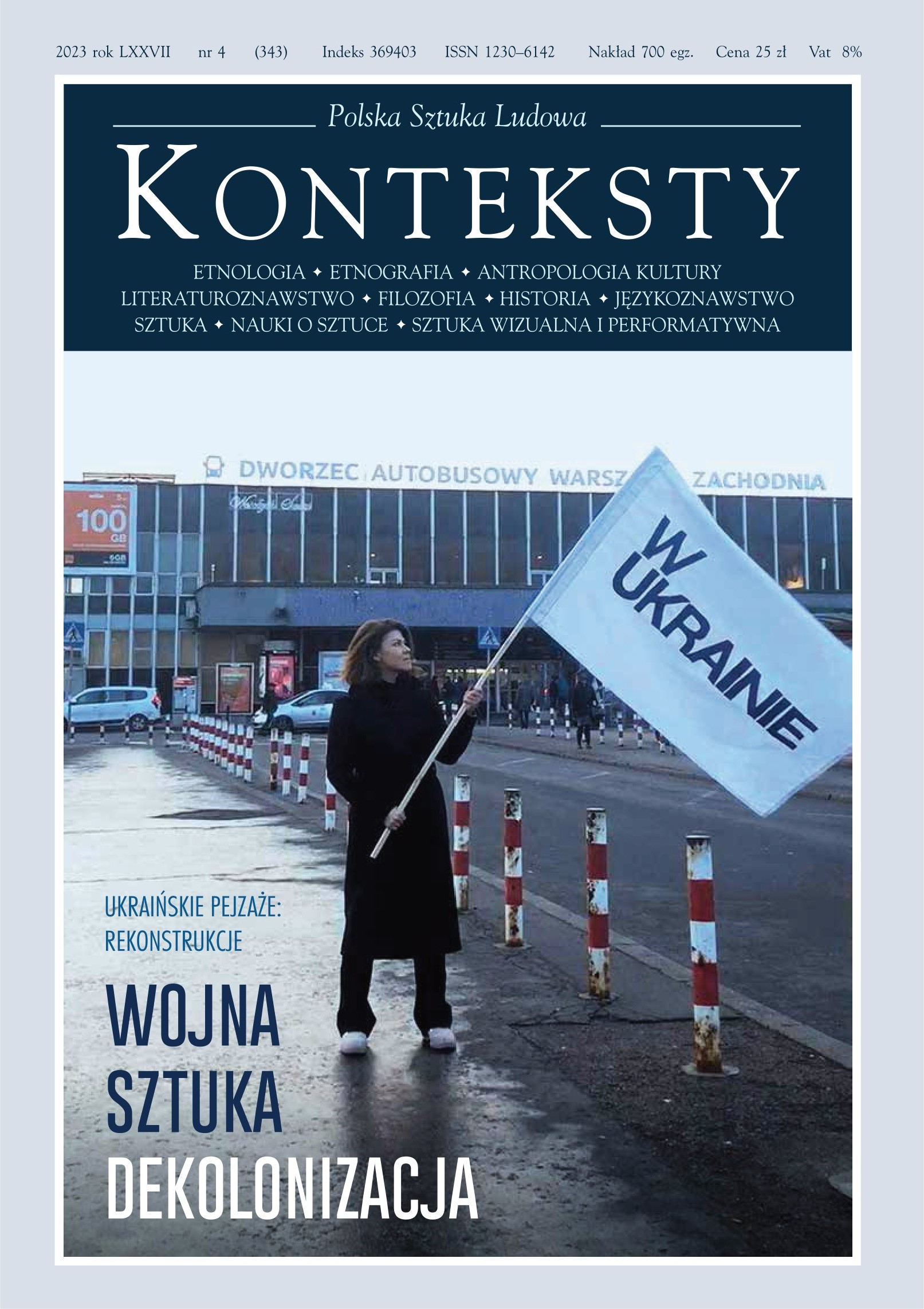
Antigone in the Queer Archive
Abstract
The author of the article analyzes the ways in which the queer archive functions in contemporary Polish non-fiction literature, using the works of Renata Lis, Sylwia Chutnik, Justyna Bilik, and Remigiusz Ryziński as examples. The starting point is the tension between the figure of the Archon – described by Jacques Derrida as the guardian of memory and archival order – and the figure of Antigone, interpreted by Ewa Majewska as a symbol of affective labor aimed at preserving the experiences of the excluded. The author analyzes the ways in which queer archives are performed in reportage and essays, drawing attention to practices of recovering genealogies, reconstructing dispersed communities of memory, and imbuing archival materials with new social meanings. Particular emphasis is placed on reflections regarding queer matrilineality in women’s narratives and the fragmentary reconstruction of the histories of queer men in Ryziński’s work. The interpretation draws on the perspective of queer archival studies and the concept of generative care from the work of Jerzy Bandel.
Keywords:
queer genealogies, Justyna Bilik, Sylwia Chutnik, Renata Lis, Remigiusz RyzińskiReferences
Chutnik Sylwia, Bilik Justyna, Kłirówy. Te, które złamały zasady, Wydawnictwo „Osnova”, Kraków 2025.
Google Scholar
Derrida Jacques, Gorączka archiwum. Impresja freudowska, przeł. J. Momro, Wydawnictwo IBL PAN, Warszawa 2016.
Google Scholar
Frydryczak Beata, Wstęp, [w:] Estetyki oporu, Wydawnictwo WSP im. Tadeusza Kotarbińskiego w Zielonej Górze, Zielona Góra 1995, s. 9.
Google Scholar
Gonda Caroline, Writing Lesbian Desire in the Long Eighteenth Century, [w:] The Cambridge Companion to Lesbian Literature, red. Jodie Medd, Cambridge University Press, Cambridge 2015, s. 107–122.
DOI: https://doi.org/10.1017/CCO9781107284333.009
Google Scholar
Grier Barbara, Factor Rhonda J., A Burning Love for Lesbian Literature, “Journal of Lesbian Studies” 2001, t. 5, nr 3, s. 87–94.
DOI: https://doi.org/10.1300/J155v05n03_10
Google Scholar
Jarzyna Anita, Nie-stosow(a)ne analogie. «Lesbos» Renaty Lis jako narracja poszerzająca doświadczenie uchodźcze. „Polonistyka. Innowacje” 2017, nr 6, s. 25–43.
DOI: https://doi.org/10.14746/pi.2017.6.2
Google Scholar
Jay Karla, Foreword, [w:] Diana Lewis Burgin, Sophia Parnok. The Life and Work of the Russian Sappho. New York University Press, Nowy Jork – Londyn 1994, s. 14–17.
Google Scholar
Kamińska Aleksandra, Halber Maria, Posłowie, [w:] Eileen Myles, Zniszczona Cindy. Broken Cindy, przeł. Elka Krajewska, Wydawnictwo Girls and Queers to the Front, Warszawa 2024, s. 4–9.
Google Scholar
Kankimäki Mia, Kobiety, o których myślę nocą, przeł. Iwona Kiuru, Wydawnictwo Poznańskie, Poznań 2024.
Google Scholar
Kłosińska Krystyna, Kobieta pisarka i XIX-wieczna wyobraźnia literacka. Sandra M. Gilbert i Susan Gubar: «The Madwoman in the Attic: The Woman Writer and the Nineteenth-Century Literary Imagination» (1979), [w:] tejże, Feministyczna krytyka literacka, Wydawnictwo Uniwersytetu Śląskiego, Katowice, s. 152–238.
Google Scholar
Król Anna, Rzeczy. Iwaszkiewicz intymnie, Wydawnictwo Wilk&Król, Warszawa 2015.
Google Scholar
Leksykon archiwum afektywnego, red. Katarzyna Tórz, Słowo/obraz terytoria, Gdańsk 2015.
Google Scholar
Lis Renata, Lesbos – poza polityką tożsamości, „Mały Format” 2018, nr 11, https://malyformat.com/2018/11/lesbos-poza-polityka-tozsamosci/ [dostęp: 06.02.2026 r.].
Google Scholar
Lis Renata, Lesbos, Wydawnictwo Sic!, Warszawa 2017.
Google Scholar
Schwartz Selby Wynn, Po Safonie, przeł. Kaja Gucio, Wydawnictwo Czarne, Wołowiec 2024.
Google Scholar
Steedman Carolynn, Something She Called a Fever: Michelet, Derrida and Dust, „American Historical Review”, October 2011, s. 1163–1165.
Google Scholar




Authors
Magdalena Krzyżanowskamagdalena.krzyzanowska@us.edu.pl
Uniwersytet Śląski w Katowicach Poland
Magdalena Krzyżanowska – doktor nauk humanistycznych, zatrudniona w Bibliotece UŚ, pracowała jako redaktorka literaturoznawczych baz danych (Archiwum Kobiet, bibliografia Bara) w IBL PAN. Naukowo zajmuje się literaturą polską XX i XXI wieku w kontekście studiów nad wykluczeniem społecznym, archiwami literackimi oraz recepcją twórczości i biografii Jarosława Iwaszkiewicza. Prowadziła badania między innymi na Uniwersytecie Oksfordzkim, Uniwersytecie w Zagrzebiu oraz w Akademii Nauk Republiki Czeskiej. Publikowała na łamach „Polish Libraries”, „Postscriptum Polonistycznego”, „Adeptus”, „Zagadnień Rodzajów Literackich”, „Kontekstów Kultury”, „SLOVO. Russian, Eastern European and Central Asian Affairs”.
Statistics
Abstract views: 0PDF downloads: 0
License
Copyright (c) 2026 Magdalena Krzyżanowska

This work is licensed under a Creative Commons Attribution 4.0 International License.